
Not every mitochondrion is the same
Bulk measurements average proteins across the whole mitochondrial population. Orgcode™ Mito uses soPBA™ (single-organelle Proximity Barcoding Assay) to profile a targeted protein panel on individual mitochondria, showing which proteins are detected together, not only how much of each is present.
From presence to proximity
Isolated mitochondria are labeled with DNA-barcoded affinity probes. Proximity barcoding then links nearby surface proteins, capturing combinations of co-localized proteins. Sequencing readouts reveal protein signatures across mitochondrial subpopulations.
Measure
Compare relative protein abundance across a targeted mitochondrial panel.
Detect
Identify co-localized protein signatures on individual mitochondria.
Explore
Compare protein patterns across samples, tissues, or conditions.
What Orgcode™ Mito reveals
Exercise-linked shifts in protein signatures
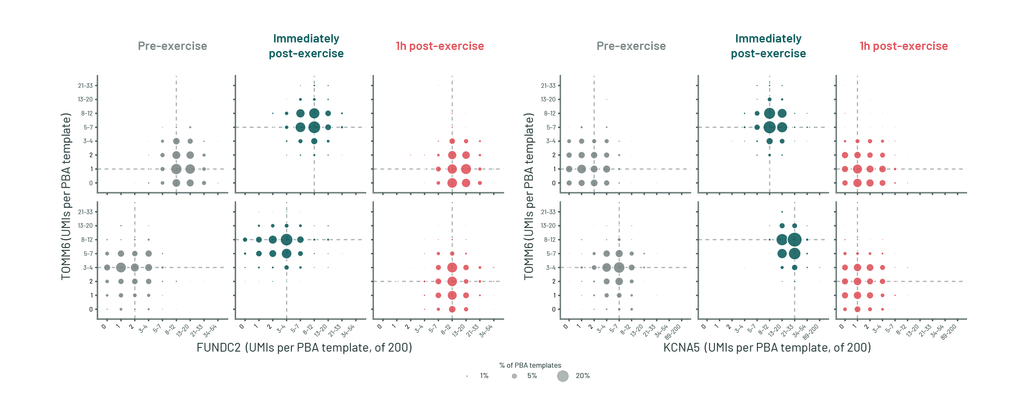
The distributions of PBA-template UMI counts for TOMM6/FUNDC2 and TOMM6/KCNA5 shifted immediately after exercise and at 1h post-exercise in plasma-derived samples.
Tissue-associated protein patterns
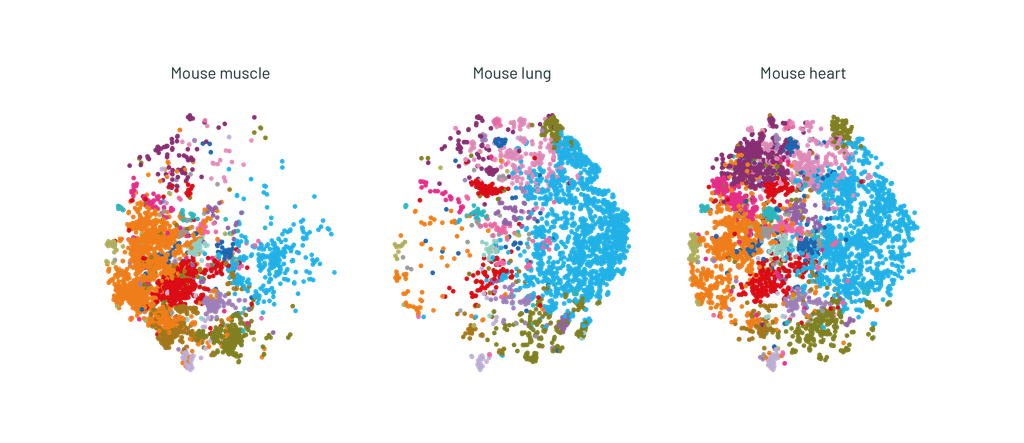
Protein profiles from mouse muscle, lung, and heart mitochondria show tissue-associated patterns and variation within each tissue. Colors indicate FlowSOM clusters of profiles with similar protein signatures.
Interested in Orgcode™ Mito?
We’re working with selected research groups to develop new organelle applications. Get in touch to discuss your research.