
Proximity Barcoding Assay
Highly multiplexed molecular profiling that preserves context across individual biological structures.
Beyond bulk molecular analysis
Bulk measurements average signals across large populations, which can obscure differences between biological structures and the relationships between molecules. Secretech Biosciences’ Proximity Barcoding Assay (PBA) reveals molecular composition, co-localization, and heterogeneity across discrete biological structures.
What PBA reveals
Molecular abundance
Measure overall protein abundance across a sample to identify differences in molecular composition.
Molecular co-localization
Identify proteins that occur together on the same biological structure, revealing molecular combinations.
Biological heterogeneity
Resolve distinct molecular signatures across individual biological structures.
Key components
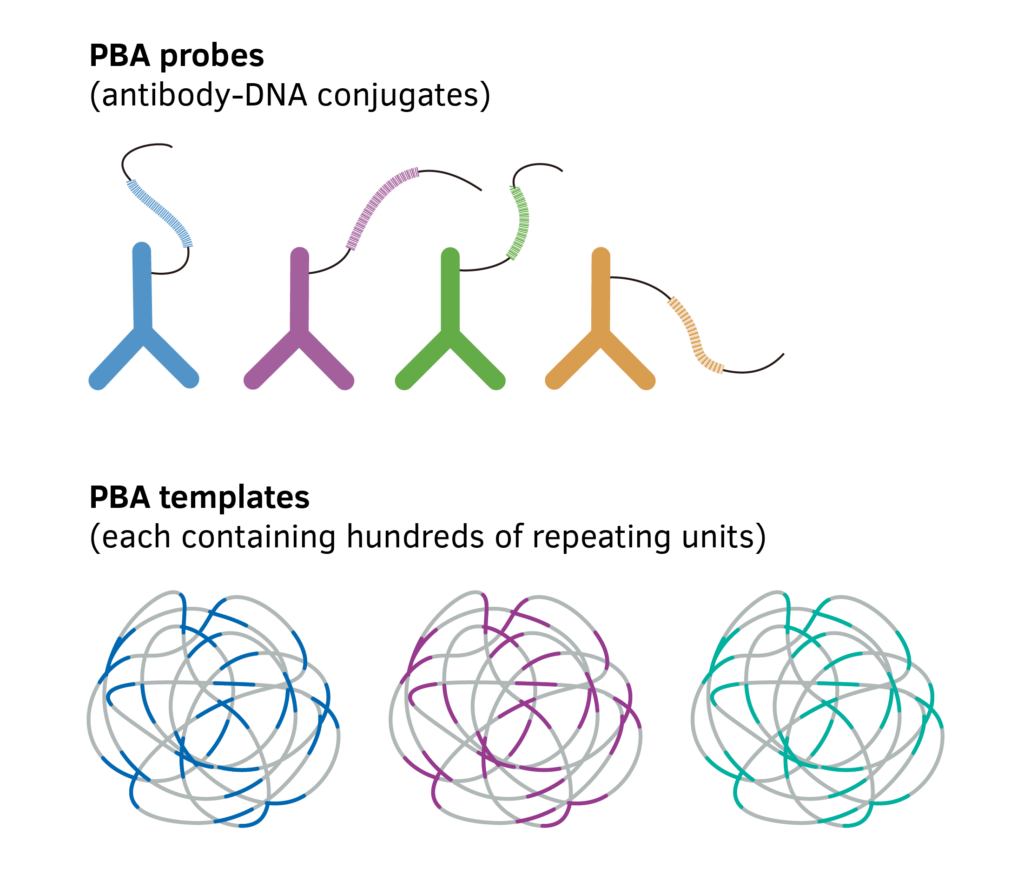
PBA combines two DNA-based components: PBA probes, antibody–DNA conjugates that bind targeted proteins, and PBA templates, rolling-circle-amplified DNA molecules containing repeating barcode units.
Together, they translate molecular proximity into sequencing-readable information.
How PBA works
-
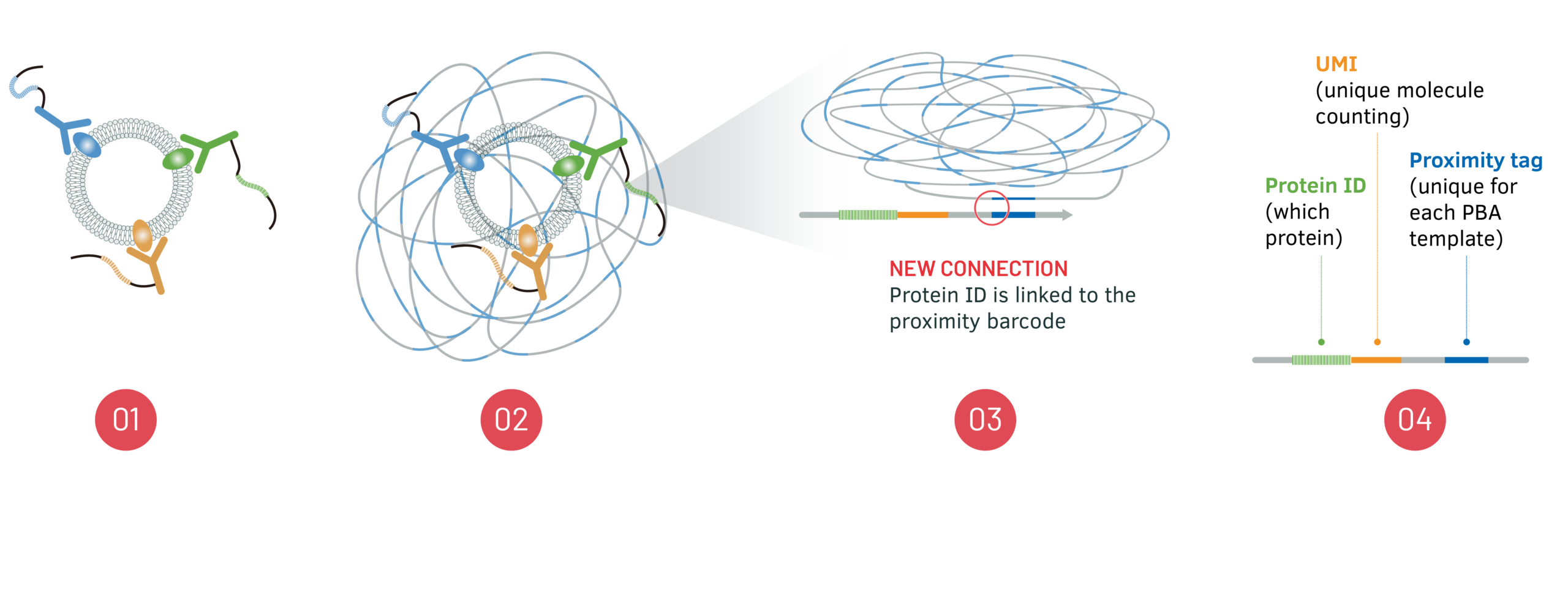
Label targets
DNA-barcoded PBA probes bind their molecular targets.
-
Capture proximity
PBA templates capture probes bind to nearby targets on the same biological structure.
-
Assign proximity tags
Captured PBA probes receive a shared tag that links nearby protein identities.
-
Sequence and decode
Amplified barcode DNA is read by NGS and decoded into molecular profiles.
One technology.
Multiple biological structures.
Extracellular vesicles
Surface-protein profiling and EV heterogeneity.
Organelles
Organelle-associated protein signatures and heterogeneity.
Emerging applications
Expanding proximity-based molecular analysis to new biological structures and research questions.
A platform built to expand
PBA is designed to support new applications while preserving molecular context.